
- 01Good will as the only unconditional good
- 02Reason’s proper end and the supreme good
- 03Duty as the test of moral worth
- 04Duty, inclination, and moral worth
- 05Respect for the law
- 06Universal law and the lying promise test
- 01Need for practical philosophy
Groundwork of the Metaphysics of Morals
by Immanuel Kant · 1785 · 3 chapters · 24/7 tutor
Duty, autonomy, and the categorical imperative.
3Chapters
21Lessons
52Topics
Certificate of completion included
This course was produced by Cavua from a public-domain text.
Skills this course leaves you with.
- Explain Kant’s transition from common moral knowledge to philosophical ethics
- Analyze the concept of duty and distinguish hypothetical from categorical imperatives
- Apply the universal law formulation to evaluate maxims and moral actions
- Interpret the humanity formula, autonomy, and the kingdom of ends
- Assess Kant’s arguments for freedom as a condition of moral agency
- Differentiate heteronomy from autonomy in moral theory
Curriculum
The full table of contents.
Every chapter, every lesson, every topic — laid out before you enroll. Click any chapter to expand it.
- Chapters
- 3
- Lessons
- 21
- Topics
- 52
- 01Duty cannot be grounded in experience
- 02Why morality must be a priori and universal
- 03Metaphysic of morals versus popular philosophy
- 01Will, obligation, and imperative
- 01Hypothetical and categorical imperatives
- 02Imperatives of skill and prudence
- 03The imperative of morality
- 01Imperatives of prudence as counsels
- 02The possibility of the categorical imperative
- 01The categorical imperative as a practical law
- 02The formula of universal law
- 01Universal law as the principle of duty
- 02Four examples of duties tested by universalization
- 03Strict and meritorious duty
- 04Contradiction in willing exceptions
- 05A priori basis of the categorical imperative
- 06Metaphysic of morals and objective practical laws
- 07Ends, means, and practical principles
- 01Humanity as an end in itself
- 02Applications to duties to oneself and others
- 01Humanity as an end in itself
- 02The will as universal legislator
- 01Autonomy of the will and heteronomy
- 02Kingdom of ends
- 03Dignity and intrinsic worth
- 01Autonomy as the basis of dignity
- 02Kingdom of ends and universal legislation
- 03Duty, respect, and human sublimity
- 01Autonomy of the will as the supreme principle of morality
- 02Heteronomy of the will and spurious moral principles
- 01Empirical principles from happiness and moral feeling
- 02Rational principles from perfection and the will of God
- 01Critique of perfection and theological morality
- 02Heteronomy of the will as the basis of false moral principles
- 01Autonomy as the foundation of morality
- 02Freedom as causality and autonomy
- 01Freedom as a universal property of rational wills
- 01Interest in the moral law and the problem of obligation
- 02The apparent circle between freedom and moral law
- 03Two standpoints: world of sense and world of understanding
- 01Freedom and the intelligible world
- 02Categorical imperatives as synthetic a priori
- 03Common reason and moral exemplars
- 01Of the Extreme Limits of all Practical Philosophy
- 01Concluding Remark on the unconditional moral law
01How many chapters are in the Groundwork of the Metaphysics of Morals course?
The Groundwork of the Metaphysics of Morals course has 3 chapters, each with its own lessons and topics.
02How many lessons are in the Groundwork of the Metaphysics of Morals course?
There are 21 lessons across the course, and you can ask your 24/7 tutor about any of them.
03Can I see what the Groundwork of the Metaphysics of Morals course covers before I start?
Yes. The full curriculum is listed on this page, beginning with "FIRST SECTION—TRANSITION FROM THE COMMON RATIONAL KNOWLEDGE OF".
04Do I get a certificate for the Groundwork of the Metaphysics of Morals course?
Yes. Finishing the course earns a personal Cavua certificate of completion.
Keep exploring
View all PhilosophyMore in Philosophy.
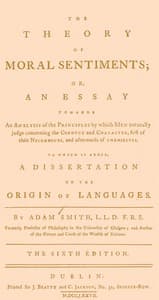
Cavua Seed Library
The Theory of Moral Sentiments
PhilosophyIntermediate
7chapters7h 54m
This course was produced by Cavua from a public-domain text.
With membership
Or preview chapter 1 free
Updated Oct 2026
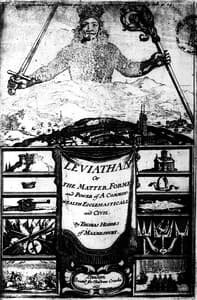
Cavua Seed Library
Leviathan
PhilosophyIntermediate
27chapters14h 42m
This course was produced by Cavua from a public-domain text.
With membership
Or preview chapter 1 free
Updated Oct 2026

Cavua Seed Library
Second Treatise of Government
PhilosophyBeginner
21chapters3h 48m
This course was produced by Cavua from a public-domain text.
With membership
Or preview chapter 1 free
Updated Oct 2026
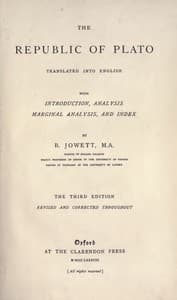
Cavua Seed Library
Republic
PhilosophyIntermediate
28chapters17h
This course was produced by Cavua from a public-domain text.
With membership
Or preview chapter 1 free
Updated Oct 2026
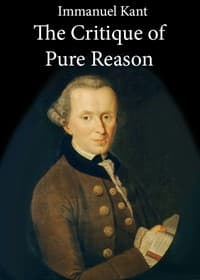
Cavua Seed Library
Critique of Pure Reason
PhilosophyAdvanced
13chapters14h 6m
This course was produced by Cavua from a public-domain text.
With membership
Or preview chapter 1 free
Updated Oct 2026

Cavua Seed Library
Confessions
PhilosophyAll levels
13chapters7h 30m
This course was produced by Cavua from a public-domain text.
With membership
Or preview chapter 1 free
Updated Oct 2026
Learn with AI
Ready to start this course?
Create your account to enroll, talk to your 24/7 tutor, and track your progress — across every device.